Bakhtiar Kaki Urs 2027
Hazrat Qutbuddin Bakhtiar Kaki — Chishti · Urs 12–14 Rabi al-Awwal
Bakhtiar Kaki Urs is in 334 days — Tuesday, 17 August 2027 (main day 12–14 Rabi al-Awwal).
Hazrat Qutbuddin Bakhtiar Kaki — Kaun The
Hazrat Qutbuddin Bakhtiar Kaki (born around 1173, passed around 1235) was a Chishti saint who settled in Delhi and became one of the central figures of the order in India. He was born in Aush (Osh) in the Farghana region of Central Asia, in what is today Kyrgyzstan, and his family traced its roots to the Prophet's line. He lost his father in early childhood and was raised by his mother, studying the Quran, Hadith and the religious sciences in his youth before turning to the Sufi path.
Travelling west through Baghdad and other centres of learning, he met and became the leading disciple of Khwaja Moinuddin Chishti of Ajmer. On his teacher's instruction he made Delhi his home, and after Moinuddin he is counted as the head of the Chishti order, carrying its path forward in the north. He was in turn the spiritual master of Baba Farid (Fariduddin Ganjshakar), through whom the order later reached Nizamuddin Auliya and spread across the subcontinent. In this chain of teachers and students, Bakhtiar Kaki stands as the key link between Ajmer and Delhi.
He is remembered for living simply and keeping a distance from the courts of rulers, choosing a life of teaching and prayer over royal favour, though the Sultan of the time, Iltutmish, held him in deep regard. He placed great value on sama (devotional listening and music); by tradition he passed away while absorbed in a sama gathering, and his funeral prayer is said to have been led by Iltutmish himself. The title "Kaki" is linked in Chishti tradition to accounts of kak (a kind of bread) associated with his household and his simple living. His emphasis on humility, service and inner devotion shaped the character of the order in India, and the lineage he helped root in Delhi remains part of the city's spiritual history.
Qutub Sahib Dargah, Mehrauli
The dargah of Qutbuddin Bakhtiar Kaki is in Mehrauli, in South Delhi, close to the Qutub Minar complex and the palace of Zafar Mahal. It is regarded as one of the oldest surviving dargahs in Delhi, and the settlement of Mehrauli grew around this site over the centuries. From the Delhi Sultanate through the Mughal period, successive rulers added structures and repairs: Iltutmish is credited with the nearby stepwell Gandhak ki Baoli, Sher Shah Suri is associated with a grand gateway, the Mughal emperor Bahadur Shah I with the adjoining Moti Masjid, and Farrukhsiyar with a marble screen and a mosque.
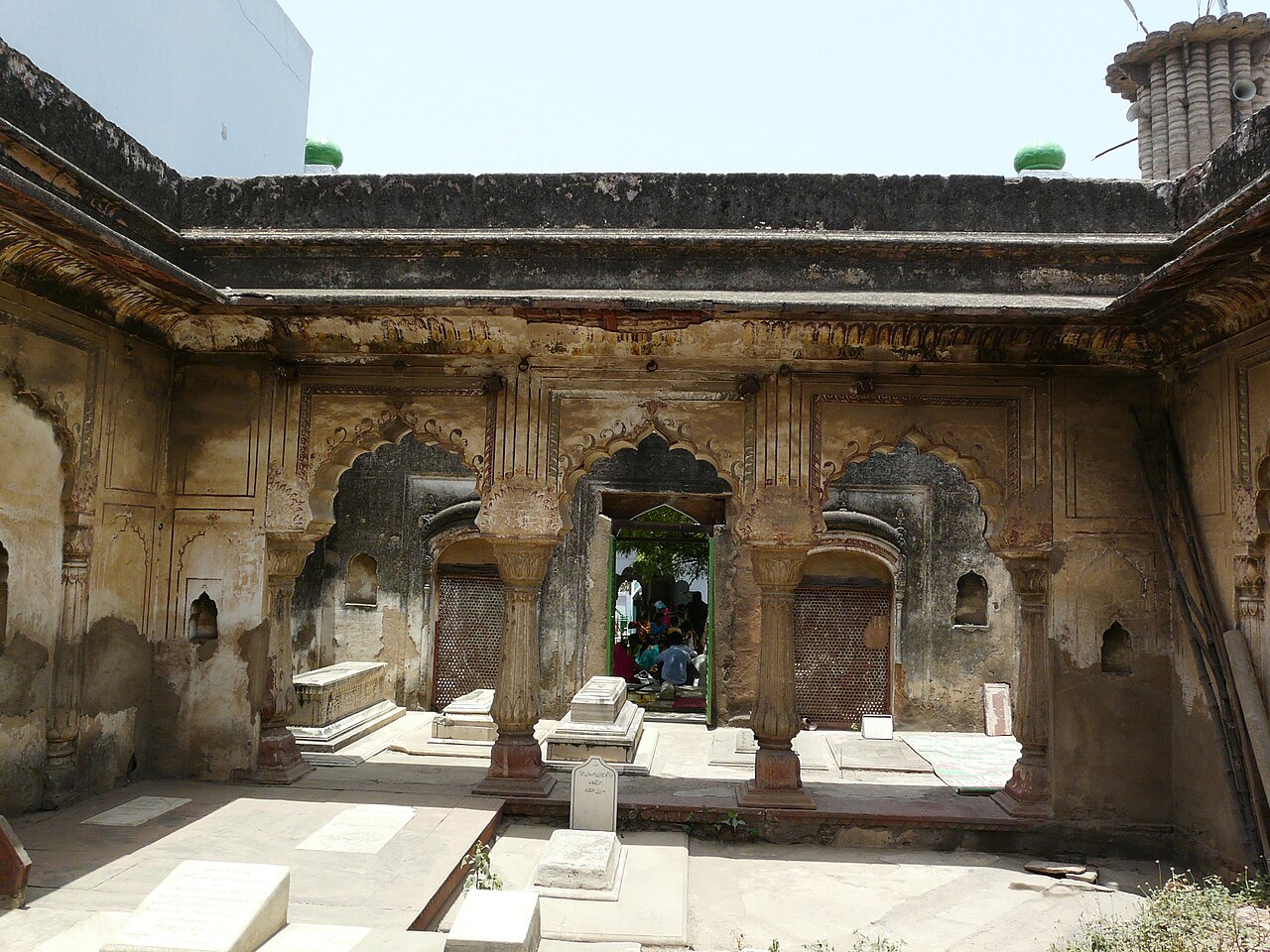
Approaching through the lanes of old Mehrauli, a visitor passes carved gateways and enters a marble courtyard where devotees gather. The mazar chamber is screened by fine lattice-work and topped by a small dome, and the enclosure is decorated with marble, tilework and inscriptions added by later patrons. Mosques and smaller tombs stand within the compound.
The shrine sits among centuries of history. Several later Mughal figures are buried close by, and the last emperor Bahadur Shah Zafar had wished to be buried here; a space kept for him in the enclosure remained empty after he died in exile in Rangoon. Nearby stand Zafar Mahal, the Qutub Minar complex, the stepwell of Gandhak ki Baoli and the Mehrauli Archaeological Park. Ringed by these monuments, the dargah keeps a quiet, historic feel away from the newer city.
Urs Kab Aur Kaise Manaya Jaata Hai
The Bakhtiar Kaki urs is observed around 12–14 Rabi al-Awwal, over about three days, with the 14th marking his passing. Because the Hijri calendar is lunar, the matching Gregorian date shifts about 11 days earlier each year, so the season of the urs moves gradually through the year; the live date and countdown for this year are shown above.
Over the days of the urs, people follow a familiar order of observances at the shrine:
- A parcham (flag) is raised to mark the start of the gathering.
- Devotees offer chadar (a decorated cloth), flowers and ghilaf at the mazar in the ritual of chadar-poshi.
- Qawwals perform through the evenings, and sama gatherings continue late into the night.
- Langar (community meals) is prepared and shared with visitors.
- The urs closes with a Qul gathering, the final prayer and fateha.
The observance carries a long historic association with the rulers of Delhi, and even today an offering on behalf of the government is customarily sent to the shrine during the urs. Large crowds come from across Delhi and beyond, and the narrow lanes of Mehrauli fill with visitors over the three days. Many also spend time at the nearby historic monuments of old Mehrauli during their visit.
Kaise Pahunche
The dargah is in Mehrauli, South Delhi. The nearest Metro station is Qutub Minar on the Yellow Line, roughly 2–3 km away and a short auto ride from the shrine; Chhatarpur station on the same line is also close. From the Metro or the main Mehrauli–Gurgaon road, autos and taxis reach the edge of old Mehrauli, and from there you walk in through the lanes to reach the shrine.
By rail, Hazrat Nizamuddin and New Delhi railway stations are the main options, both around 15–18 km away, with taxis, autos and app cabs available. Indira Gandhi International Airport is around 15 km from Mehrauli. The area is well connected by road and by DTC and cluster buses from central and South Delhi, so most visitors arrive by bus, cab or Metro-plus-auto and cover the last stretch on foot.
Ziyarat Ke Liye Tips
The urs days are the busiest, so expect heavy crowds in the narrow lanes; if you prefer a calmer visit, come on an ordinary day or early in the morning, and avoid the peak afternoon heat in summer and the coldest winter nights. Shoes are removed before entering, so wear footwear you can slip off easily, and keep your phone, wallet and other valuables close in the crowd. Dress modestly, and women may wish to carry a scarf to cover the head. Thursday evenings, when qawwali is often performed, are a popular and atmospheric time to visit.
The dargah is open to visitors of all faiths and backgrounds; simply keep your voice low, follow the queue, and be mindful of those praying. Since the shrine sits among historic monuments, you can combine your visit with the Qutub complex, Zafar Mahal and the Mehrauli Archaeological Park nearby. See the urs calendar for other dargah dates through the year.